When people first hear about a white-label gaming platform, one question usually comes up very quickly: What do I actually get at the end?
Because for most operators, the decision is not just about whether a platform looks good on a website. The real question is whether the product behind it is structured, complete, and ready to support a real business.
That is exactly where clarity matters.
Launching a Platform Is Not Just About “Having a Site”
A lot of people assume that launching a gaming platform mainly means getting a frontend online. But a real launch is much more than that.
A usable platform needs more than pages and branding. It needs a backend structure, operator logic, payment readiness, configuration control, and a workflow that allows the business to actually run after launch.
This is where many projects become slower, more expensive, and more fragmented than expected.
Different systems need to be connected. Different settings need to be coordinated. And different teams often need to work across product, operations, branding, and technical setup before anything is truly usable.
So when evaluating a platform like Speedix, the better question is not just:
“Can it launch a site?”
It is: “What does it give the operator as a working business environment?”
What Clients Actually Get with Speedix
Launching with Speedix is not just about getting a homepage online.
It is about receiving a structured environment that is already designed for operational use.
At a practical level, clients get:
- a branded frontend environment,
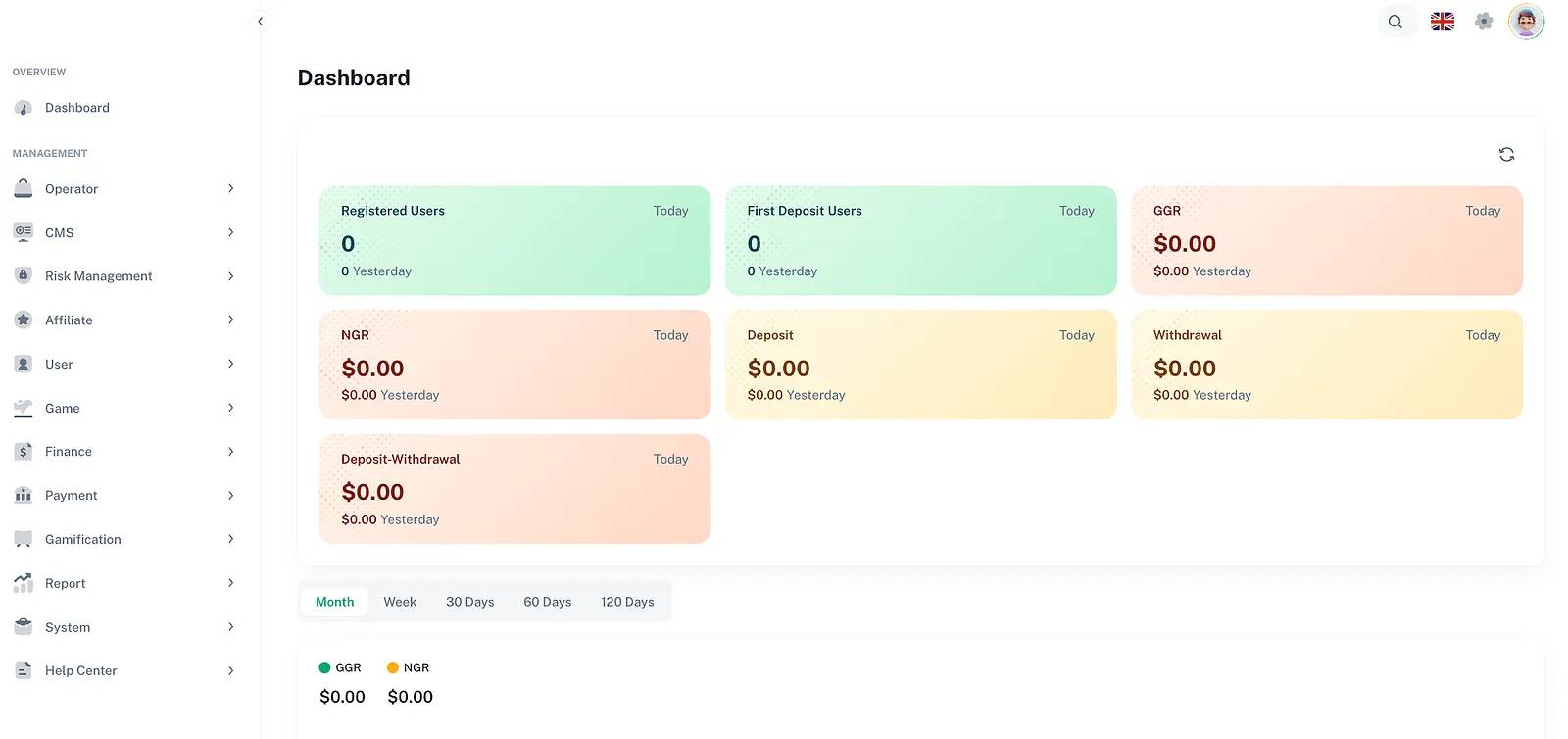
- a configurable backend,
- operator-level setup and control,
- CMS capability for content and page structure,
- payment and wallet-related infrastructure,
- and a launch workflow that connects configuration to deployment.
That combination matters because it changes the nature of the product.
Instead of treating launch as a disconnected collection of tasks, Speedix presents it as one connected platform environment.
1. A Frontend That Is Ready to Be Branded and Presented
The first visible part of delivery is the frontend.
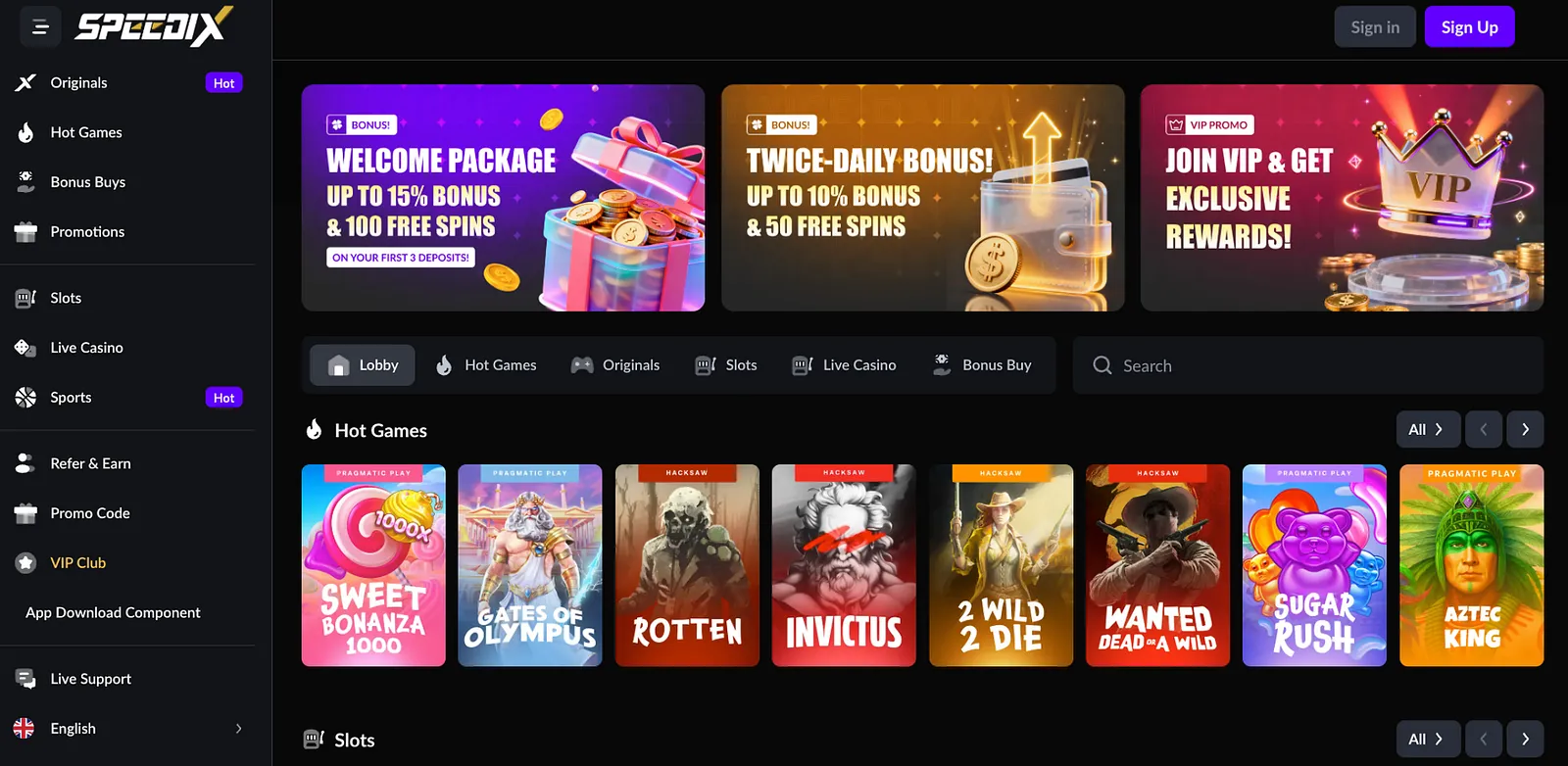
This is what users see. It is also what many clients first imagine when they think about launch.
But the frontend is not just a visual layer. It is the part of the product that carries first impressions, brand consistency, promotional visibility, and user confidence.
With Speedix, the frontend is not approached as a blank destination. It is part of a broader launch-ready setup, where structure, template logic, navigation, and branding choices all contribute to a usable operator site.
That means clients are not starting from an empty shell.
They are starting from a platform environment that can be configured, adapted, and prepared to look operationally ready.
2. A Backend That Supports Real Operator Management
For clients, one of the biggest trust signals is whether the product goes beyond presentation.
A site can look polished and still fail operationally if the backend is weak, disconnected, or too dependent on manual handling.
What clients need is a backend that is not treated as an afterthought.
They need a place where operator setup, reporting structure, localization, configuration logic, and management controls are already part of the system.
This is one of the most important things clients actually receive with Speedix: not just a visible site, but a real management environment behind it.
That distinction matters. Because a product feels more trustworthy when it clearly supports both the external platform experience and the internal operational workflow.
3. A Structured Operator Setup, Not Just a Generic Platform
Another major part of delivery is operator structure.
This is important because serious clients do not just want “a platform.” They want a platform that can be configured around their own business model, operating logic, branding decisions, and launch plan.
That is why operator creation matters so much.
It is not just a technical step. It is the point where the platform begins to reflect the operator’s own setup.
This includes the kind of decisions that affect real usage later:
- operator mode,
- template choice,
- branding direction,
- reporting currency,
- supported language setup,
- supported currency setup,
- and localization decisions that shape the actual business environment.
When clients understand that these are built into the platform workflow, trust increases.
Why?
Because the product no longer feels generic. It feels structured.
4. CMS Control for Ongoing Content and Layout Management
One of the biggest concerns clients often have is what happens after launch.
Can the platform still be adjusted? Can content be updated? Can page structures evolve without rebuilding everything?
This is where CMS capability becomes part of product trust.
A platform becomes much more credible when clients can see that it is not frozen after deployment.
Instead, it remains manageable.
Navigation, homepage sections, content structure, and page-level presentation are not just fixed outcomes. They are part of an environment that can continue to be refined as operational priorities change.
That matters for clients because it signals flexibility without chaos.
Not everything needs to be rebuilt from scratch. But the platform also does not need to remain static.
5. A Launch Workflow That Feels Practical
Trust is not created by feature lists alone.
It is also created by workflow.
Clients become more confident when the path from setup to launch feels practical, understandable, and connected.
That is one of the biggest strengths of a platform like Speedix.
Instead of turning launch into a vague process involving too many disconnected steps, the platform makes the workflow easier to understand:
- create the company,
- create the operator,
- configure key settings,
- prepare the frontend,
- align the backend,
- and move toward a usable launch state.
This is important because clarity itself builds confidence.
A product feels more trustworthy when clients can understand how they move from decision to deployment.
6. More Than a Product Demo — A Usable Business Environment
This may be the most important point of all.
What clients actually get is not just a product demo.
They get a business environment that is intended to support launch readiness.
That includes not only what can be shown on screen, but also what can be configured, managed, localized, updated, and operated afterward.
This is where Speedix becomes easier to trust as a product.
The value is not only that it looks launchable. The value is that it is structured to help operators move toward a real working platform more efficiently.
For clients, that reduces uncertainty.
And reducing uncertainty is one of the strongest forms of trust a product can create.
Why This Matters for Client Confidence
Most clients are not only evaluating software. They are evaluating risk. They are trying to understand:
- whether the platform is mature,
- whether the setup process is realistic,
- whether the product can support branding and operations together,
- and whether launch will feel manageable instead of fragmented.
This is why clarity of delivery matters so much.
The more clearly a product can show what is included, how it works, and what the operator receives, the easier it becomes for clients to trust it.
That is also why “what you get” is a better trust-building question than “what features exist.”
Because clients do not buy isolated features.
They buy confidence in the platform behind them.
Final Thought
In the end, launching with Speedix is not simply about putting a gaming site online.
It is about gaining access to a platform environment that brings together frontend presentation, backend control, operator setup, CMS management, and launch-oriented configuration in one connected workflow. And that changes the conversation.
Instead of asking whether the product can be shown, clients can start asking whether the platform is ready to support the business they actually want to build.
That is a much stronger place to begin.
If you want to explore how Speedix works in practice, visit speedix.io.